
Why Robotics Is Moving Beyond the Factory Floor
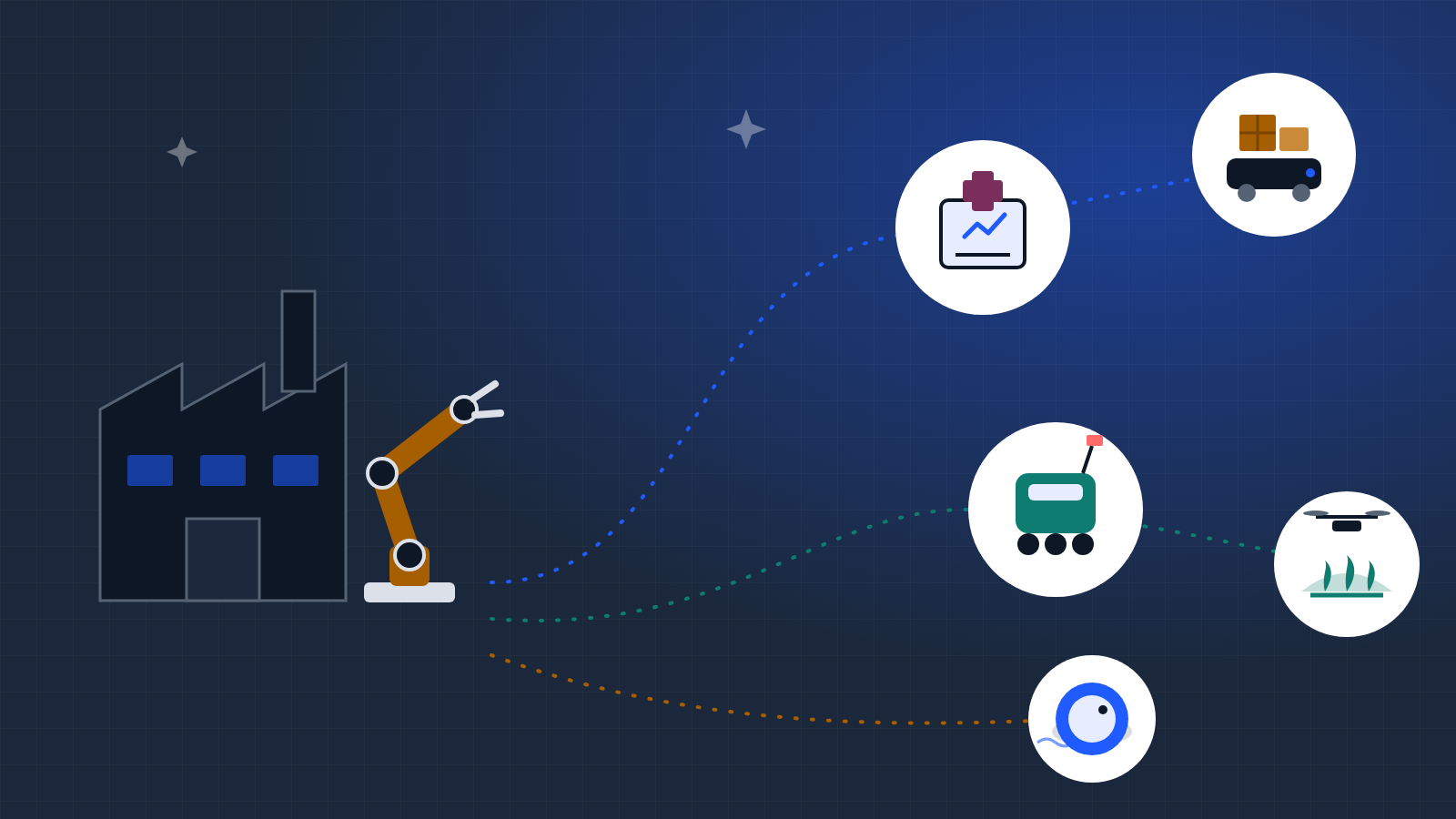
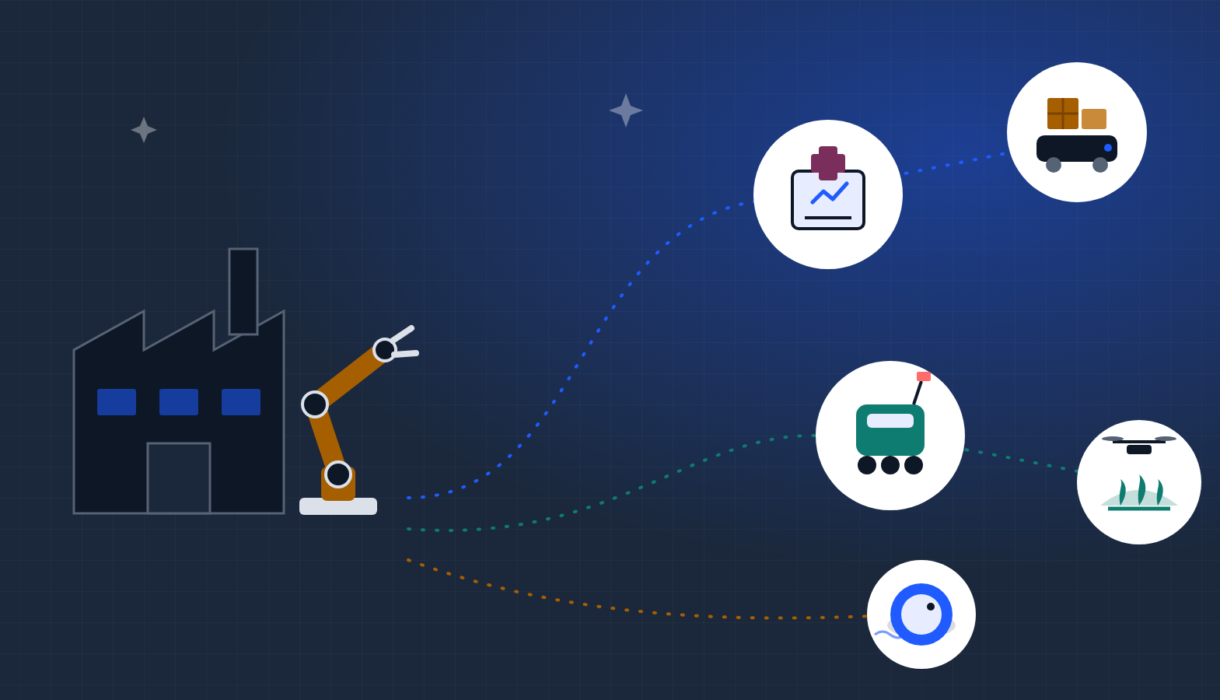
For half a century, robots lived behind safety fences in car plants and electronics factories. That is changing. Robots now move parcels in warehouses, assist surgeons, clean airports, deliver food and work in fields — and the first humanoid robots are being sold for commercial use. Here's why robotics is spreading beyond the factory, where it's showing up, and what still holds it back.
- Factory robots are at a record high: 603,307 industrial robots were installed in 2025, and 5 million are now at work worldwide.
- Sales of professional service robots — robots that work outside traditional manufacturing — rose 24% in 2025 to nearly 250,000 units.
- Nearly half (47%) of them move goods in warehouses and logistics; medical, cleaning, hospitality and farm robots make up much of the rest.
- Labour shortages, cheaper sensors and AI, and pay-as-you-go "robot-as-a-service" models are driving the shift.
- Messy, unpredictable environments and working safely alongside people remain the biggest challenges.
The factory was only the beginning
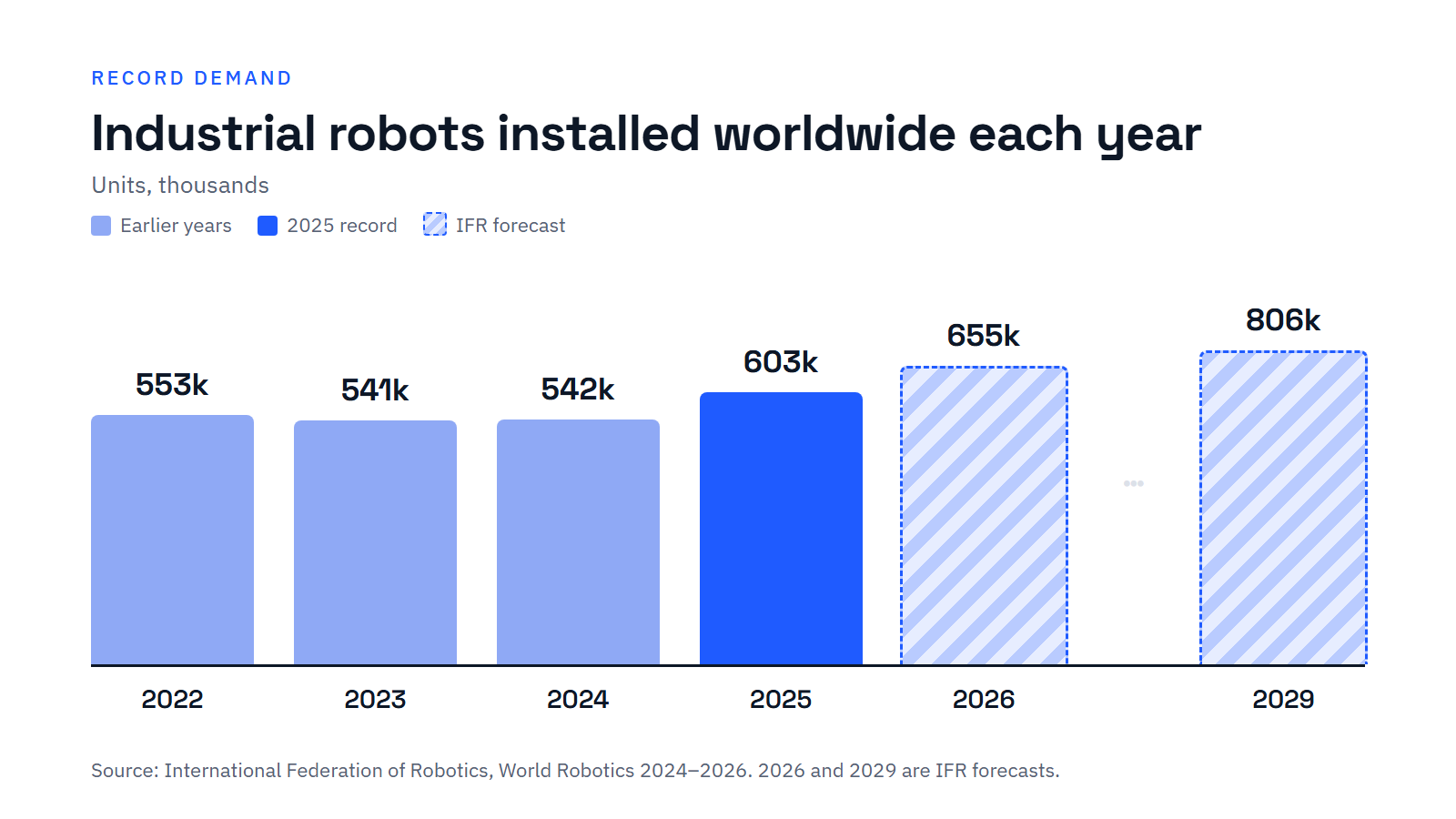
Industrial robots are not going away — far from it. According to the International Federation of Robotics (IFR), 603,307 industrial robots were installed worldwide in 2025, an 11% rise and a new record. The global stock of factory robots reached 5 million units, and the IFR expects annual installations to climb to around 806,000 by 2029 [1]. China alone accounted for 59% of installations.
But the bigger change is happening elsewhere. A growing share of robots now work in places that look nothing like a production line: hospital corridors, supermarket aisles, hotel lobbies, farms and city pavements.
The international standard ISO 8373 separates industrial robots — programmable machines used in manufacturing — from service robots, which do useful work for people or equipment outside industrial automation [4]. Service robots split into professional robots used by businesses and consumer robots used at home, such as robot vacuum cleaners and lawnmowers.
Why robots are leaving the factory now
Three forces are pushing robots into new settings at the same time:
Not enough workers
Ageing populations and staff shortages in logistics, healthcare, cleaning and agriculture are pushing employers to automate tasks they can no longer fill. The IFR cites these shortages as a key driver of service-robot demand [2].
Smarter, cheaper robots
Cameras, lidar and AI-based navigation have become far cheaper and more capable. Robots can now map a building, avoid people and recognise objects — skills that factory robots, working in fixed positions, never needed.
Pay-as-you-go robots
With "robot-as-a-service", businesses rent robots for a monthly fee instead of buying them outright. The IFR reported that this model grew by 31% in 2024 [2], lowering the barrier for smaller companies.
Where robots are showing up
The IFR's latest figures show how quickly service robots are spreading [3]:
~250,000
professional service robots sold in 2025, up 24% [3]
47%
of them used in transport and logistics [3]
34.2 million
consumer service robots sold in 2025, up 37% [3]
~7,000
full-size humanoid robots sold for commercial use in 2025 [3]
Warehouses
The biggest market by far. Mobile robots carry shelves, totes and pallets to human pickers, cutting the miles staff walk each shift. 117,500 transport and logistics robots were sold in 2025 [3].
Hospitals
Surgical robots help with precise, minimally invasive operations; 8,400 were sold in 2025, up 57%. Other robots support rehabilitation, run lab tests or deliver medicines and linen [3].
Cleaning
Autonomous floor scrubbers clean airports, shopping centres and offices overnight. More than 25,000 professional cleaning robots were sold in 2024, up 34% [2].
Hotels and public spaces
Robots guide visitors, run information points, deliver room service and act as telepresence screens. Over 42,000 hospitality robots were sold in 2024 [2].
Farms
Milking robots, autonomous tractors, weeding machines and drones. Nearly 19,500 agricultural robots were sold in 2024 — a slight 6% dip, showing that growth isn't uniform [2].
Homes
Robot vacuums, mops and lawnmowers are by far the most common robots on Earth by number, with 34.2 million consumer service robots sold in 2025 [3].
Humanoids: the newest frontier
Humanoid robots — machines with a roughly human shape, two arms and often two legs — have moved from research labs into early commercial use. The IFR counted about 7,000 full-size humanoids (over 140 cm tall) sold in 2025 for commercial and professional applications beyond research and entertainment [3].
A humanoid's appeal is simple: it can, in theory, work in spaces designed for people without rebuilding them.
That number is still tiny next to the 5 million robots in factories, and most deployments are pilots — moving boxes or totes in warehouses and car plants. Whether humanoids become a mainstream tool depends on cost, reliability and how well they handle tasks that today's specialised robots already do more cheaply.
What's still hard
Factories are tidy and predictable. The outside world is not. Moving beyond the factory floor exposes robots to challenges they never faced behind a safety fence:
- Messy environments. Wet floors, crowds, clutter, pets and changing layouts are far harder to handle than a fixed workstation.
- Safety around people. Robots sharing space with the public must slow down, stop and avoid contact reliably. Standards such as ISO 10218 (industrial robots) and ISO 13482 (personal care robots) set the safety rules [5].
- Reliability and cost. A robot that needs frequent rescuing by staff can cost more time than it saves.
- Public acceptance. Pavement delivery robots and robots in care settings raise questions about privacy, accessibility and the human touch.
- Jobs. Robots often take on the heaviest or most repetitive tasks, but they also change job content and require new maintenance and supervision skills.
What it means for businesses
For many organisations, robotics is no longer a question of building a new factory. It's a question of whether a robot can take on a specific, repetitive task — moving goods, cleaning floors, delivering items — safely and at a reasonable cost.
- Start with one task. The best early uses are dull, repetitive and physically tiring jobs with a clear measure of success.
- Consider renting. Robot-as-a-service shifts the cost to a monthly fee and leaves maintenance with the provider.
- Involve staff early. People who work alongside robots know where they will help — and where they will get in the way.
- Check safety and data. Ask suppliers which safety standards apply, and what camera or location data the robot collects.
What to watch next
- Humanoid pilots. Whether early warehouse and factory trials turn into large, repeat orders.
- AI "brains" for robots. Foundation models that help robots understand instructions and adapt to new tasks without reprogramming.
- Healthcare demand. Whether surgical, rehabilitation and care robots keep growing as populations age.
- Regulation. New safety and liability rules for robots working in public spaces.
- Factory forecasts. Whether installations reach the IFR's forecast of around 806,000 a year by 2029 [1].
Sources
Every figure in this article comes from the sources below.
- International Federation of Robotics (2026). "Five Million Robots now Operate in Factories Globally." World Robotics 2026 — Industrial Robots, press release and executive summary.
- International Federation of Robotics (2025). "Service Robots See Global Growth Boom." World Robotics 2025 — Service Robots, press release and executive summary.
- International Federation of Robotics (2026). "Global Sales of Professional Service Robots Surge 24%." World Robotics 2026 — Service Robots, press release.
- ISO 8373:2021. Robotics — Vocabulary. International Organization for Standardization.
- ISO 10218 (Parts 1 and 2). Robotics — Safety requirements for industrial robots; ISO 13482. Robots and robotic devices — Safety requirements for personal care robots.